
Public Health Section
The Public Health Section promotes tuberculosis awareness, prevention, and community-focused healthcare initiatives through outreach and public health programs.
Departments
Public Health Section
The Public Health Section of New Delhi Tuberculosis Centre plays a pivotal role in strengthening the activities of the National Tuberculosis Elimination Programme (NTEP) through community outreach, awareness generation, patient support and preventive services. The section works with the vision that hospitals should not only provide treatment to patients but also actively engage with the community to create awareness, encourage early diagnosis and promote prevention of tuberculosis.
Major Activities of the Section
The Public Health Section undertakes a wide range of public health and awareness activities throughout the year, including:
- Health talks and awareness sessions
- Community meetings and outreach activities
- IEC (Information, Education and Communication) initiatives
- Training and sensitization programmes
- Linkages with external agencies and NGOs
- Tuberculin and Cy-TB testing services
- DOT cum Microscopy Centre services
- Research and public health activities
Health Education and Awareness Activities
Health talks on various aspects of tuberculosis and NTEP are conducted regularly in the OPD halls, Mantoux examination hall and other public areas of the Centre. These sessions focus on:
- Signs and symptoms of TB
- Importance of early diagnosis and treatment
- Drug adherence and DOTS strategy
- Prevention and infection control
- Drug-resistant TB and MDR-TB management
- Services and benefits available under NTEP
Various IEC tools such as flip charts, pamphlets, posters, paintings and audiovisual aids are used to create awareness and maintain active participation of patients and attendants.
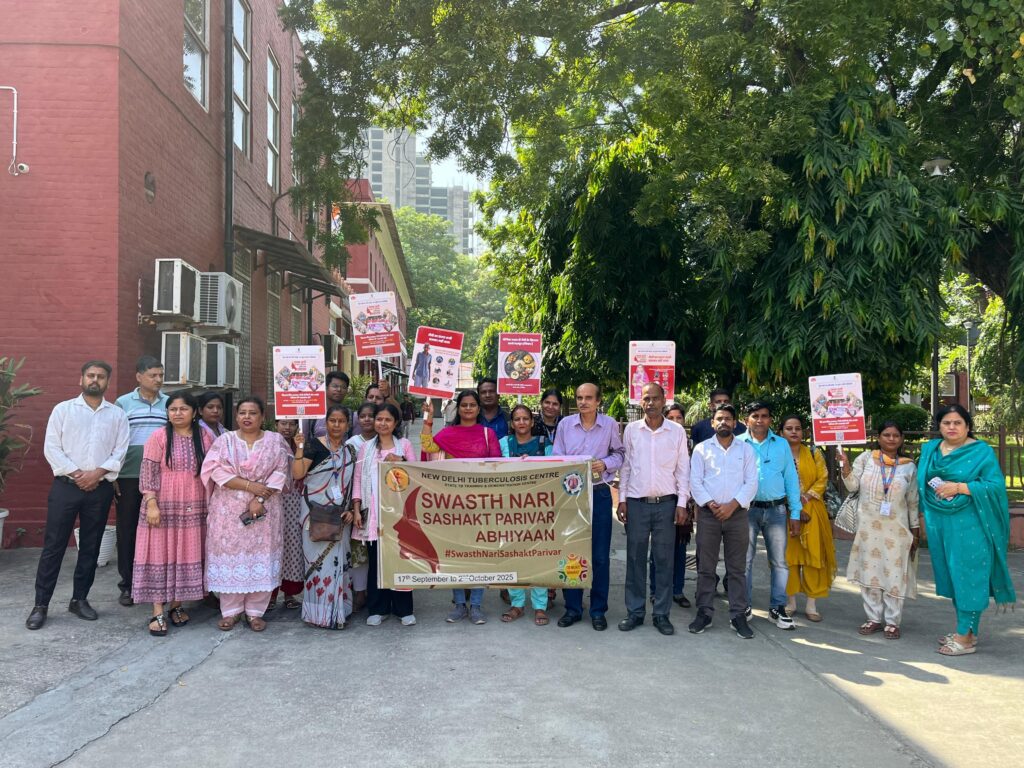
Special awareness programmes are also conducted for high-risk groups including PLHIV, children, people residing in slum areas and intravenous drug users. Activities such as one-to-one counselling, community meetings, lectures, nukkad natak, painting competitions and awareness rallies are organized to enhance community participation in TB prevention and control.
Sensitization and Training Programmes
The section regularly organizes sensitization programmes for nursing students and healthcare personnel from various institutions. These sessions include training on:
- National Tuberculosis Elimination Programme (NTEP)
- Diagnosis and treatment of tuberculosis
- DOTS implementation
- MDR-TB diagnosis and management
- Infection prevention and control in healthcare settings
- Role of nursing personnel in TB patient care and prevention
Tuberculin and Cy-TB Testing Services
The Public Health Section manages the Tuberculin Unit and performs Mantoux (Tuberculin) testing for patients attending the Centre as well as referred cases from nearby hospitals and private practitioners.
The Centre has also introduced Cy-TB testing under the programme for eligible patients, contributing significantly towards early diagnosis and control of tuberculosis.
DOT cum Microscopy Centre
The DOT cum Microscopy Centre (DMC) at the Centre functions under the Lok Nayak Chest Clinic and has been operational since February 2017. The Centre provides diagnostic and treatment services as per NTEP guidelines and caters to a population of approximately one lakh.
The DMC is equipped with all essential facilities for sputum microscopy, treatment initiation, follow-up and drug distribution. Dedicated staff members ensure regular monitoring and uninterrupted availability of medications for TB patients.
Community Outreach and IEC Activities
Community participation forms the cornerstone of the Public Health Section’s activities. Community meetings are organized regularly in nearby localities and chest clinic areas to disseminate authentic information regarding TB and address public concerns.
Information, Education and Communication (IEC) activities are carried out through:
- Community meetings
- Health talks
- Awareness rallies
- Munadi and public announcements
- Distribution of pamphlets
- Slogan, poetry and painting competitions
- Awareness campaigns through schools and NGOs
These initiatives help reduce stigma, promote treatment adherence and encourage timely diagnosis and treatment.